(This episode is the first in season 2 of Theo Pham’s Diary, titled Theo Pham’s Diary: Transit. Newly tasked with the responsibility for on-the-ground coordination at her Vietnamese NGO’s event, Theodore Pham embarks on a flight to Taipei where she will meet with participating activists from Vietnam, Hong Kong and Myanmar ahead of her bosses, Hồng and Duy. See here for brief reflections on last season and here for the last chapter of Season 1.).
‘We… Will be landing in Taipei in… 45 minutes…’ The pilot is Thai and sounds exactly like an acquaintance from language exchange who made decent money selling t-shirts. During the U.S. election period, his Vote Kamala and Vote Trump shirts were best sellers, although rainbow text LGBT shirts are strong performers all year long. When the pilot switches to Thai, his speech flow accelerates from the tedious drip of a leaky tap to fireman’s hose.
I spend the last 45 minutes of the flight to Taipei watching a woman sitting three rows in front as she does her makeup. Her mirror is the size of an iPad with an oily streak around the spot where her thumb is. Different coloured tubes and applicators pop open and dab at different parts of her face which I can see magnified in the reflection. Finally, she ties her hair into a half updo and slides sunglasses on top. Her mauve talons tap against on colourful bubbles in the mobile game Candy Crush. I feel cheated, made a fool who has fallen for a real-life version of doom-scrolling, and lament all the ‘productive’ time lost. Any star employee would have been drafting blog posts, emails or reports for their company.
Once able to access airport Wi-fi, Hồng’s instructions come through to my phone.
1. At immigration, don’t mention the conference. Here is a hotel to put down as the intended address. Say you’re just travelling. It doesn’t make a difference for your visa anyway.
My passport pouch strap and backpack keep getting tangled when I try to withdraw my phone. Other people also fumble with phones, all likely trying to do their arrival cards at the last minute as well. I enter the hotel address one block at a time while glancing up every few seconds like a pigeon to avoid lagging in the queue.
Back in Sydney’s Vietnamese Community, Bác Hùng warned that there were many ‘eyes and ears’ (Vietnamese spies) in places like Taiwan and Thailand. I am likely not privy to the full extent of risk being undertaken. Vietnamese civil society is closed so much information even within the same team is restricted to individuals who need it rather than being available in a central drive. Other than my bosses, I have not seen most of my colleagues’ faces or any of their real names. Another instruction from Hồng pops up while I am trying to input the decoy address:
After you, Tuấn and the lawyer check into the hotel we booked, we have an online meeting with our team in Vietnam who doesn’t know that Tuấn is here. Let’s keep it that way.
Those based in Vietnam are not allowed to meet in person or know of one another’s whereabouts. I had made the mistake of mentioning hiccups with our Taipei-based event which Hồng quickly brushed over during an online call. She then directly messaged me to say we were keeping information about that situation away from our Vietnam-based colleagues.
2. Tuấn and a Vietnamese lawyer (panellist/facilitator) will meet you Taipei Main station. They’re flying from Hanoi then taking the fast train from Kaohsiung to avoid suspicion from Vietnamese authorities. Unless they ask, don’t tell them about the threatening emails from Vietnamese authorities to our participants. I’ll update you when the time is right.
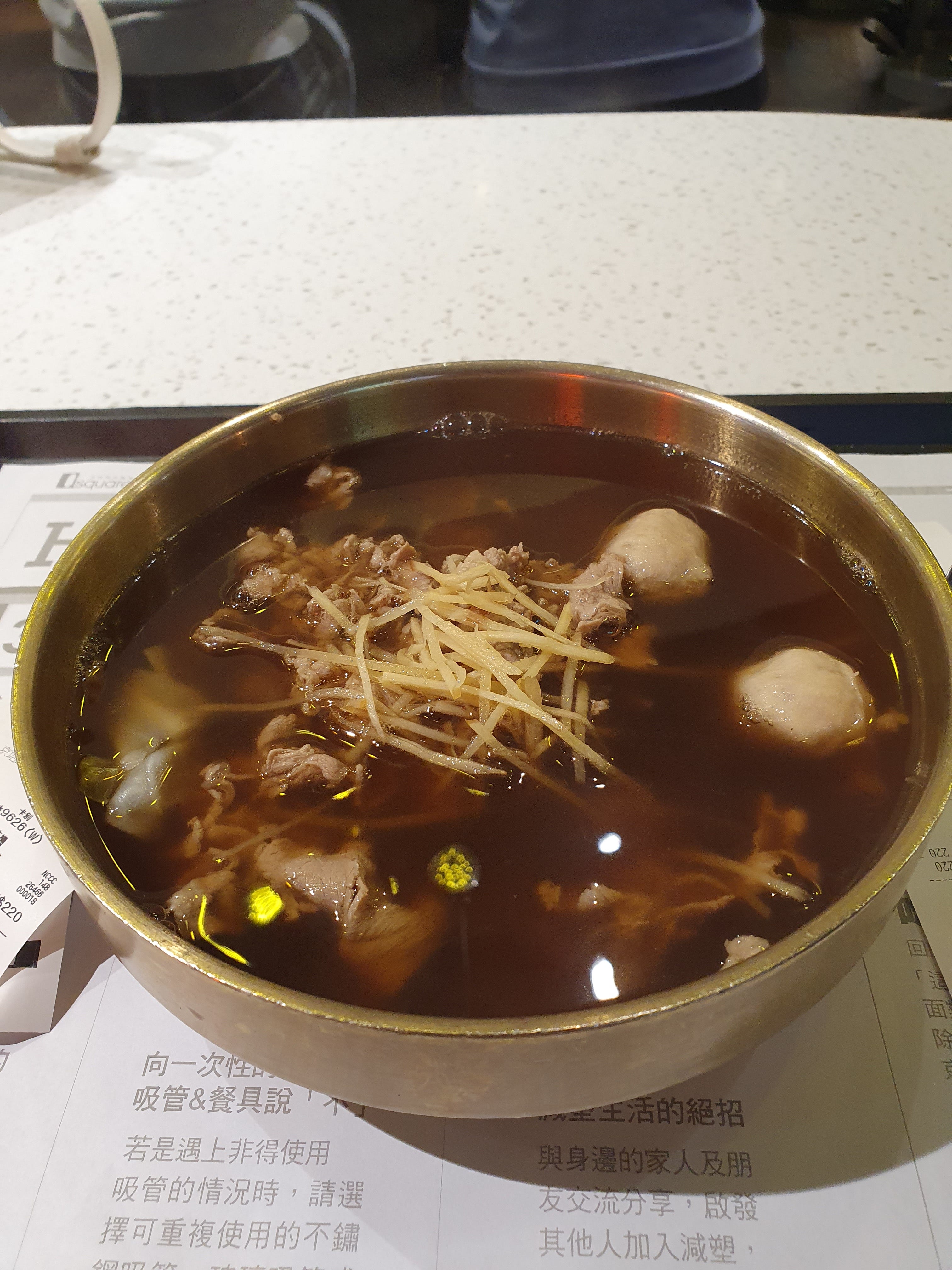
My stomach grumbles as I hold a tray of beef tendon noodles in the food court. The fragrant, meaty smell worsens the friction in my innards because there are no seats. I scan for any gaps between groups of schoolgirls with too-white makeup or flocks of tourists. Any circular stool, any spare corner.
‘Em!’ A man calls to me in Vietnamese. There is Tuấn, barely taller than me and grinning like the Monkey King. ‘Sit here.’
‘Thank you, anh.’ I ask while bringing my tray over. We had met at a conference earlier in the year. He was coquettish about the state of his membership in and relationship with Việt Tân, an exiled pro-democracy party which the Vietnamese government blacklisted as a nhóm khủng bố (terrorist group). I still do not understand what he meant about me having ‘an important role’. However, he seemed to think that civil society was about eventually funneling activist into party politics and facing up against the state. ‘Did the train come early?’
‘Yes, but my friend will be here later. We left at different times to avoid arousing suspicion.’ Tuấn takes my bag for me but I am suspicious of gentlemanly gestures. My ex-boyfriend, Sơn, also knew how to charm. Men simply learn chivalrous behaviours through Pavlovian conditioning where the positive outcome might be sex, attention, money, or disclosure of potentially useful information from the target. ‘So, how is Hồng? Are things for the event going smoothly?’
‘Yes… It has been busy but alright.’ Hồng’s instruction to conceal the new security developments from Tuấn plays on loop in my mind. Before, I might have just blurted it out, thinking ‘he’s going to find out anyway!’ Now, I know to wait. Every piece of information about activists, documents and events can be assembled like IKEA furniture. Sharing them at the wrong time could endanger entire movements.
Lying to authorities to dodge political scrutiny, trying to evade Vietnamese spies – becoming an unwitting political pawn is exactly what my father warned against. But I was already a failure in my extended family. Coordinating this event is a pressure test. Many things are beyond my knowledge: who exactly is Việt Tân? And who are the underground, ‘grassroots’ organisations trying to operate below the Vietnamese government’s protection? Why would I, someone who can pass as non-Vietnamese and speaks Vietnamese weirdly, be a threat? Prior to this trip, I was just an idiot who kept updating event enrollment sheets incorrectly and other technical mishaps. For now, discreet observation will be the best course. I must prove my usefulness.
I used to think that I could be a ‘normal girl’, if only I could transition out of the NGO sector and find a regular job. Perhaps the work situation needs to be read in reverse: I have a naturally distrustful disposition which makes me a good fit for work with Vietnamese civil society. For the most part, I can hide this secretive nature from non-activist friends. They just know me as the awkward and clumsy Theo Pham fumbles with cards and reveals her position too early.
‘There he is!’ Tuấn stands up and waves, ‘Sơn ơi! Here.’
Cartilage clogs up my throat. Relax: Sơn is a common name and wasn’t my past love interest a journalist, not a lawyer? I peer through a crowd of office workers and spot another younger man waving at us – it’s that Sơn.